In today’s time, getting discovered online has changed dramatically in the age of AI-driven search. Search engines now increasingly rely on AI-generated answers, chat-based results, and structured data—often surfacing information without users ever clicking through to a website.
For brands, this creates a new challenge: how do you stay visible when customers get answers directly from AI? This is where AI SEO becomes critical.
They serve both everyday customers and corporate buyers. People love them for their handcrafted cakes, premium ingredients, and ready-to-ship gift packages for holidays and events.
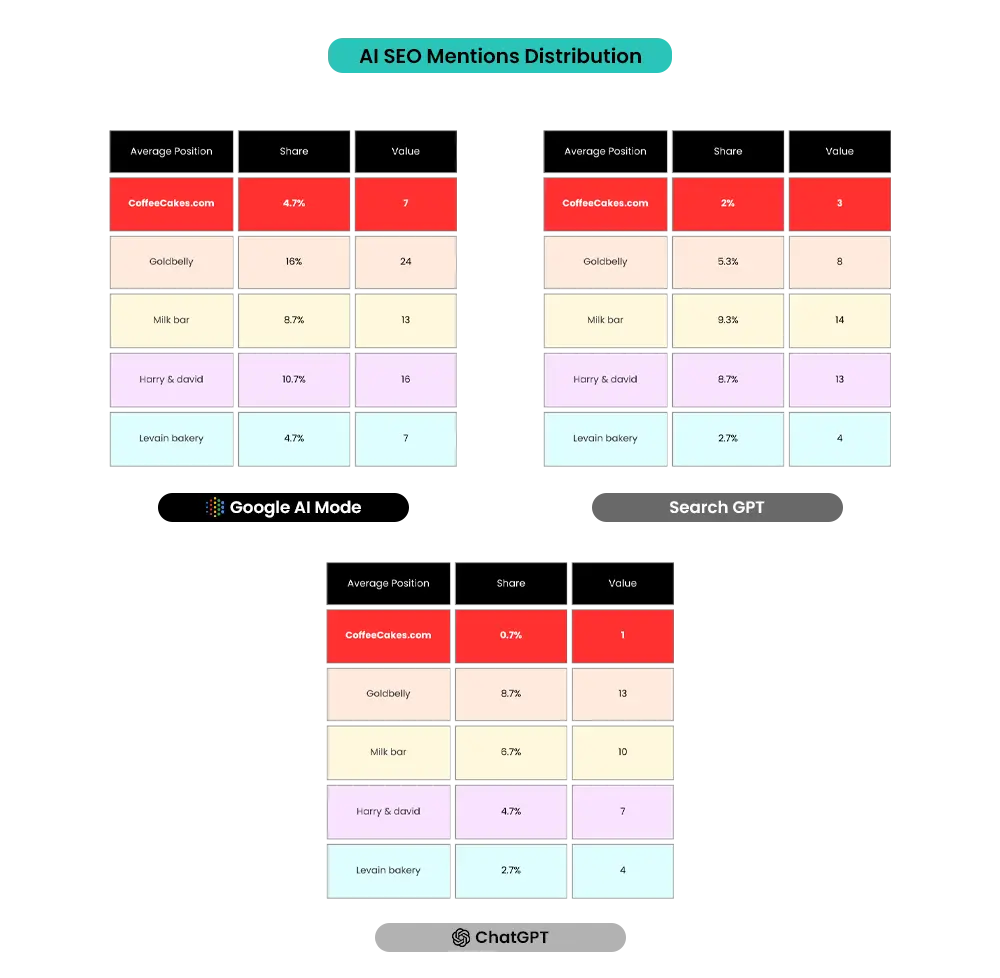
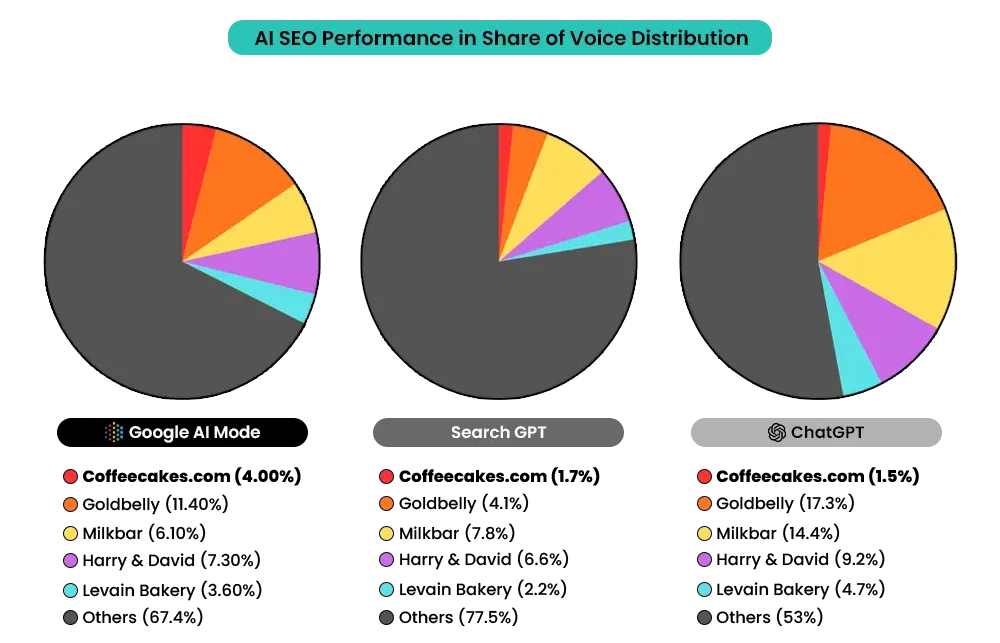
The client reached out with a very specific concern: they were losing visibility in AI-based search platforms, which meant their AI SEO strength was far behind competitors.
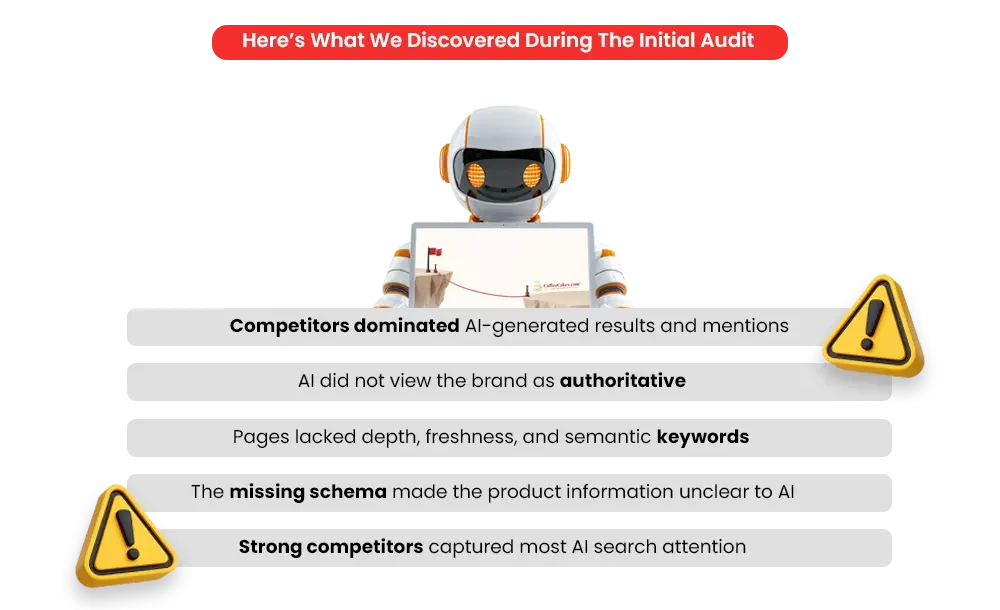
Here’s what we discovered during the initial audit:
1. Low AI Visibility Score: Competitors were appearing more often in AI-generated answers, while Coffee Cakes barely showed up.
2. Weak Topical Authority: AI systems didn’t consider the brand a strong authority for key keywords, so they often recommended competitor links.
3. Outdated & Less Relevant Content: Some pages lacked depth, freshness, and semantic keywords, which reduced indexing and relevance.
4. Missing Structured Data: Without proper schema, internal linking, and semantic context, AI systems struggled to understand what the website actually offered.
5. Competitive Sector: The niche has strong competitors, so losing AI search share directly affected keyword positions and awareness.
In short, even though the brand had great products, AI engines didn’t have enough signals to trust, cite, or recommend them.
To boost AI SEO, we focused on improving AI Search Visibility rather than just traditional ranking.
Here’s what we implemented:
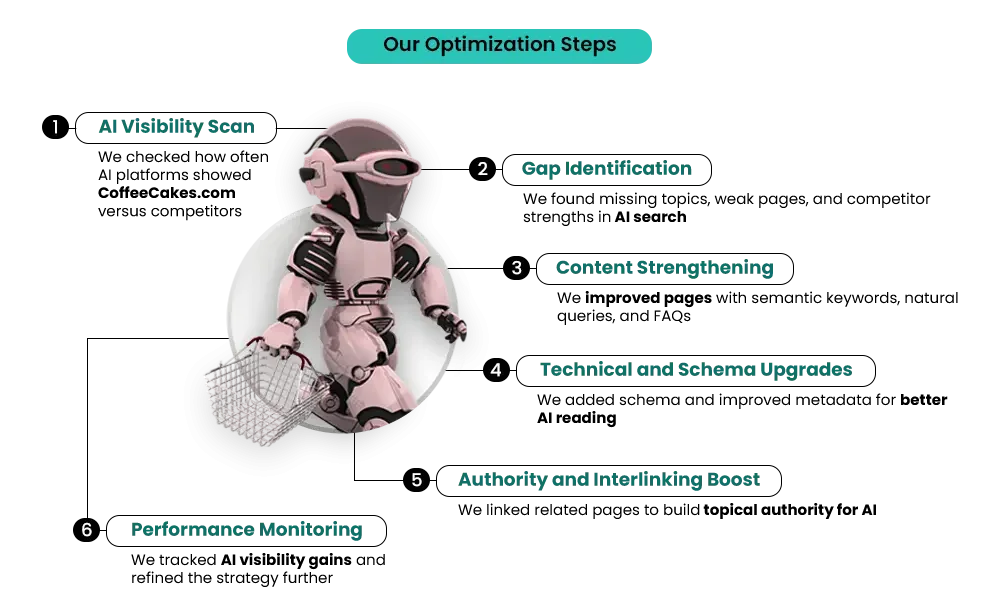
To make sure every issue was addressed properly, we followed a structured step-by-step execution plan:
We analyzed Coffee Cakes alongside top competitors.
This helped us understand how often AI engines were citing their pages, how visible they were in answer-style results, and which keywords or topics competitors were dominating.
Once visibility data was collected, we mapped missing topics, outdated content, weak pages, and keywords that lacked supporting topical content.
We also observed competitor pages that were frequently getting discovered or cited during AI queries, which highlighted strategic weaknesses.
We refreshed important pages by adding semantic keyword clusters, question-based queries, natural language answers, and product-specific FAQs.
This made it easier for AI systems to understand what each page offered and match it to real search intents.
We implemented product, FAQ, and breadcrumb schema to support AI reading and knowledge panel understanding.
Metadata was cleaned and made more descriptive so AI models could interpret product categories and gift-related offerings accurately.
Internal links were created around core themes like gifting, holidays, and bakery product types.
This formed small topical hubs that signaled stronger authority to AI algorithms and helped distribute relevance across important pages.
After the updates went live, we re-evaluated visibility numbers and tracked mentions across AI platforms.
This allowed us to adjust content strategy for AI SEO, where competitors still had an edge, and continue refining topical signals over time.
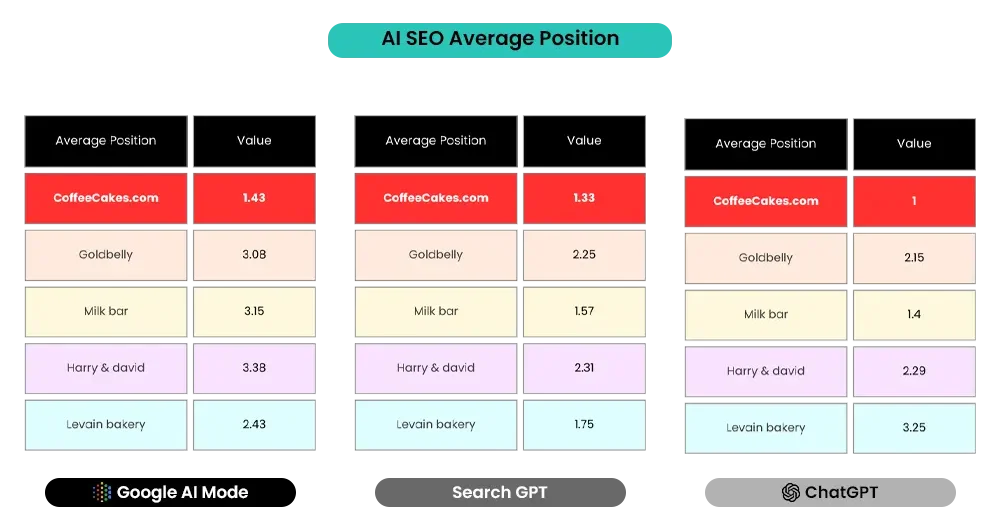
These updates led to measurable improvements in a short time frame:
This showed that AI systems were now interpreting content more accurately and matching it to relevant user queries.
Moving from zero visibility demonstrated a shift from being overlooked by AI engines to being recognized across multiple query contexts.
These early results proved that AI SEO doesn’t always require major website overhauls; sometimes, structured improvements, clarity, and topical depth are enough to unlock opportunities.
If you want to understand how prepared your brand is for AI-based search and answer engines, reach out to Mastroke for an evaluation and strategy call.